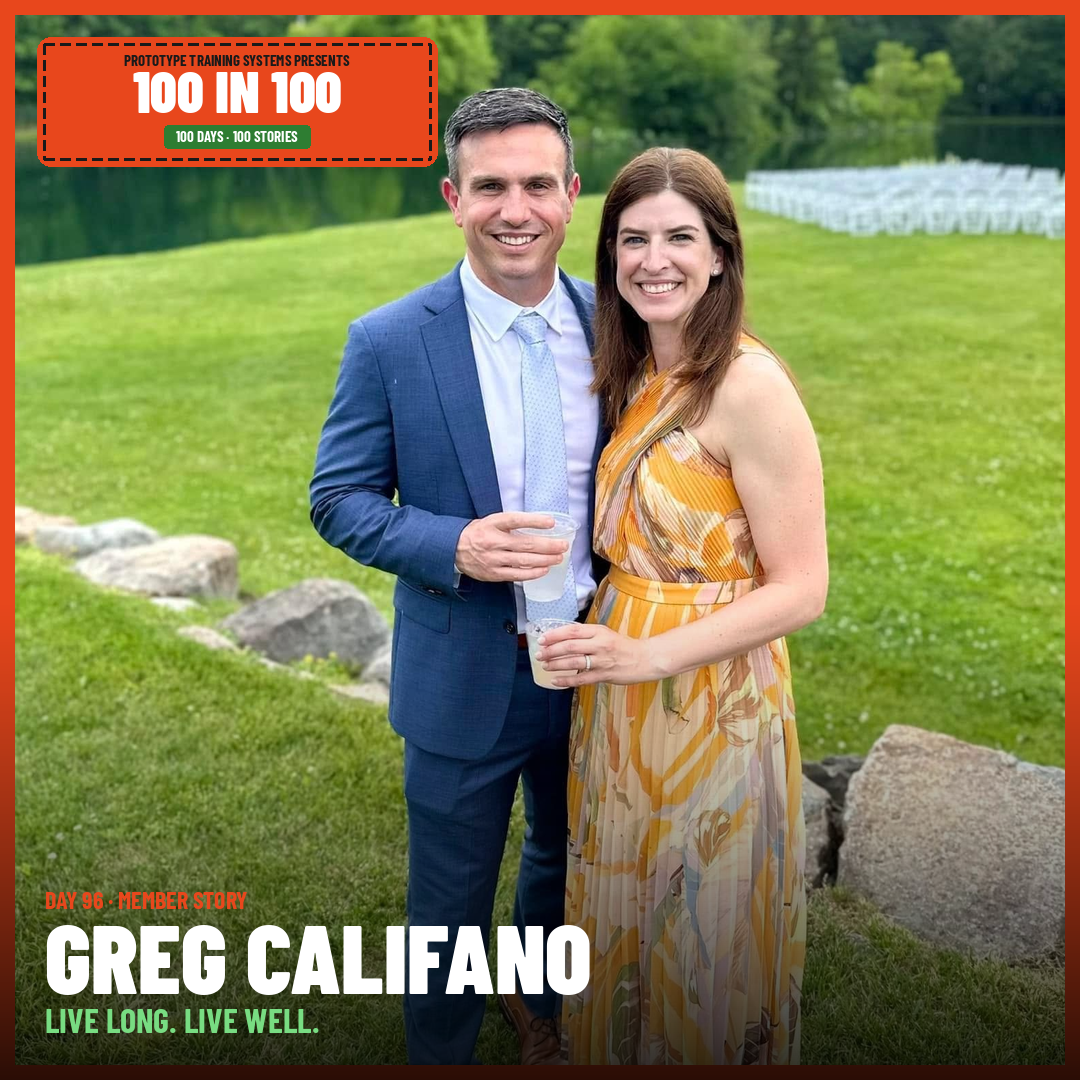
Steve Cimino and I met in the fall of 2006, my first semester at Westfield State, both of us living in Lammers Dorm. The first time I actually met him, he wanted me out of the room. I was a freshman hanging out with my roommates in his girlfriend Jackie's dorm room, and Steve walked in and thought, who are these freshmen and why are they in here? I had a soul patch at the time. He has never let me forget it. He still claims it's the only facial hair I can grow.
We were both dealing with injuries that ended our shot at playing college sports. His was a knee, for soccer. Mine was an elbow, for baseball. We never really bonded over that directly, but we were both competitive and needed somewhere to put it. That somewhere turned out to be intramurals.
A few days later we ended up on the same team in a pickup touch football game on the quad. He was good, I was good, and afterward he walked into my room and the second thing he ever said to me was, "You want to play on the flag football team?" I said sure. We named the team The Playmakers, after a short-lived ESPN show, and from there it turned into an indoor soccer team, then dodgeball, then basketball. Over the next several years — four for me, six for Steve, since he's two years older — we built a small dynasty and dominated intramurals. By senior year we were recruiting talent to hang more banners. When his roommate left to study abroad, I moved into his room, and we lived together for the rest of college. I was the third wheel on most of his and Jackie's dates. Jackie is now his wife. I'm still around.
So when people ask how Steve ended up at Prototype, the honest answer is that it's a more complicated story than "he applied." Steve was the Director of Performance Coaching for the New England Revolution, working with their academy players on the way up to the pros, and he and I had started another business together on the side. As he was transitioning out of the Revs, I told him I had a few athletes, and asked if he wanted to coach them for some extra money while we worked on the other thing. We thought it would be cool to work together.
"Didn't know that I would be here for, I think, 10 years now when we first did that. But I'm glad I made that decision, for sure."
— SteveSteve in the Back
Steve wasn't here from the start, and he'll be the first to tell you he didn't come in planning to stay. He was living in Natick with Jackie, no kids yet, and he figured this was a part-time job while he waited to get back into professional sports or for our other business to take off. He wasn't the GM. He was a personal trainer, coaching a few athletes and doing his work in the back.
He'd been in the building before, for holiday parties and the occasional workout when he was in the area, so he knew what the facility looked like. What he didn't understand yet was the community. I'd talked about it plenty outside the gym. He thought it was, in his words, "a CrossFit, cultie type of thing." That's just what CrossFit people say.
Here's the part I love about Steve's story, because I don't think most people know it: it took him five years to start taking classes. Five years of coaching here, working out on his own, "that guy in the back doing stuff." I asked him why more than once. His answer now is that it was ego. He was a trainer, he was a coach, he looked at what everybody was doing and knew he wouldn't be that good at it, and he was scared to be seen not performing well.
Then Tim Furbush said something to him. "I didn't even know who you were. You were just always that guy in the back." Tim meant it nicely. Steve thought about it and realized he was standing outside the thing everyone else in here was doing, and that as a leader in this place, he probably should have jumped in a long time ago.
"Why did I wait so long to do this? Why was I so worried about what people would think of me? Not only did I get in better shape doing it, I had so much fun doing it and made so many more friends."
— SteveHe calls it a turning point in his career here, and I agree. It's also the reason he can look a nervous first-timer in the eye and mean it when he says the hard part is walking in. He knows. It took him five years.
Not a Transactional Place
What kept Steve here wasn't the job. He's had jobs. What he'd never had was a place where going to work didn't feel like going to work. "I felt like I was going to hang out with my friends," he told me. Jon, Brian, the members, the people he trained. It felt like an extension of what he already had with his family and friends outside the gym, not a transactional environment where you do your job and go home.
His first full client was Josie Ferguson. I introduced him to Lillian and Marty when he started, and Josie became the first athlete he coached all the way through. She used to complain every single time she got sweaty, which he loved. He says that family is a big part of why he stayed, and he's built a lot more relationships like that with parents and youth athletes since.
Now his mornings start with a micro-community of adult clients who all love working out together: Greg, Jenny, Beth, TJ, Kristen, Kate. He says seeing them first thing gives him energy for the rest of the day. Then he and I meet on whatever we're building, he works out with the noon class, and from two to five every day of the week he's on the floor with our youth athletes. When he's not doing something here, he's doing something soccer-related, because on top of his role at Prototype he's the Director of Coaching for Westborough Youth Soccer.
The Whole Person
Ask Steve what he wants people to take away from training here and he'll tell you that a lot of people can write a good program. If you follow it, you'll get results. That's not what makes this place different.
"The coaches here and myself, we care. We don't just give workout advice or design a program. It reaches much further than that."
— SteveWith his adult clients, that means following up on how the weekend went, what's going on with their kids. With his youth athletes, it means going to their games, building relationships with their parents, checking in on how they played. He says every coach here does that, and it's why people keep coming in. We're training the whole person, and sometimes something you're working on in a workout turns out to be the thing you needed help with somewhere else in your life.
It goes the other way, too. A lot of Steve's clients are really successful people, and he asks as many questions as he can during sessions, then brings what he learns back to Prototype and back home to his family. His coaching philosophy isn't fancy. Exercise is simple if you break it down, and a lot of people overcomplicate it. The first job of a coach is to understand what motivates a person and figure out how to keep them consistent. If you can't do that, the rest doesn't matter. After that, it's curiosity. He looks at every person who walks in as a puzzle: everyone moves a little differently, everyone has something a little different going on, and he finds it fascinating to figure it out. The coach adapts to the person, not the other way around.
Coaching Is the Highest Form of Learning
The programs Steve is proudest of are the ones we built together. Performance coaching takes athletes outside of what they're doing in the gym and coaches them on mindset: how to attack a challenge on the field, how to handle college recruiting, how to earn starting minutes. He works with athletes like Caroline and Ella on that, and he told me he learns as much from them as they learn from him. He'll give one of them advice on something they're working through and think, I should really do this myself. He's dealing with the same hesitation and fear they are, just on a different playing field. Reaching out to someone. Something going on with his kids.
Then there's the Academy. Steve has been in youth soccer for twenty years, and he's seen the pressure the club system puts on families: the rat race of competing to stay relevant, the burnout, kids who love the sport wanting to quit. Soccer was his outlet growing up, and he remembers wanting to stop because of the pressure to play at a high-level club and then in college. He doesn't want other kids to feel that. So when we built the Academy, the goal was simple: keep kids in the community, train the whole athlete, and give the sport back to them. Right now there's a third- and fourth-grade Academy team in here working out and doing team-building together, and he loves it. Add in coaches like Jason and Santi, and he thinks it's just the start.
"You're teaching these kids a lifelong skill that they're going to be able to take with them. I wish more parents would look at this type of training as an investment in their future, the same way they look at some other stuff in the classroom."
— SteveThat's the thing he takes the most pride in. Not the "I made the team" texts, though he loves those. It's the kid who started with him in seventh grade and went on to want to work in this field. Abbie, whose soccer team he coached and who trained with him from seventh grade on, told him he was one of the inspirations for her to become a trainer. She's getting her master's at Springfield now. It's watching Caroline and Ella attack problems differently than they did a year ago. It's Greg telling him he loves that his whole family works out here, and that the thing he loves doing is something he gets to do with them. The Queenins, Greg and Jenny and their kids, TJ and Kristen and their daughter. Steve wants more of that. More families in the building, more great young coaches, more people to learn from.
A Better Dad
I asked Steve how his life would be different if he'd never come here. His first answer: "Probably fight with Mike a lot less."
His real answer was that he doesn't think he'd be anywhere near where he is today. He's grown from the pushing (he says I push him hard and he knows I believe in him), from the people he works with, and from the parents of the kids he coaches. He's got an eight-year-old and a four-year-old and another on the way, and he's spent ten years watching people like Greg and Beth and Chad raise their families and talk to their kids. He says that's something to aspire to.
"Without any of that, I think I wouldn't be as good of a dad as I am today. I definitely wouldn't be the coach I am today, and I don't know what I'd be doing."
— SteveThe way he describes his own change over ten years is that he used to look at situations from the outside, at how they affected him. Now his default instinct is to ask what he can do about it. Nobody can lift the weights for you, nobody can go to the hard practices for you, and if you apply that to the rest of your life, it changes things. He credits the leadership work we've done together and, again, the people he coaches. He also got into golf, which he always assumed was for old, unathletic people. He says he guesses he's there now.
Steve came to Prototype for a part-time gig between businesses. What he found was a place where he never once felt like he was going to work, a career he didn't plan on, and a decade of being surrounded by successful, hardworking, kind people. His words: "How could you not take something good away from that and infuse it into your own life?" He considers himself lucky to have had the chance. I'd say the same about having him here.