
Building Better Youth Athletes: What We Shared with Westborough High School’s Winter Sports Teams
2025-2026 Westborough High School Winter Sports Meeting
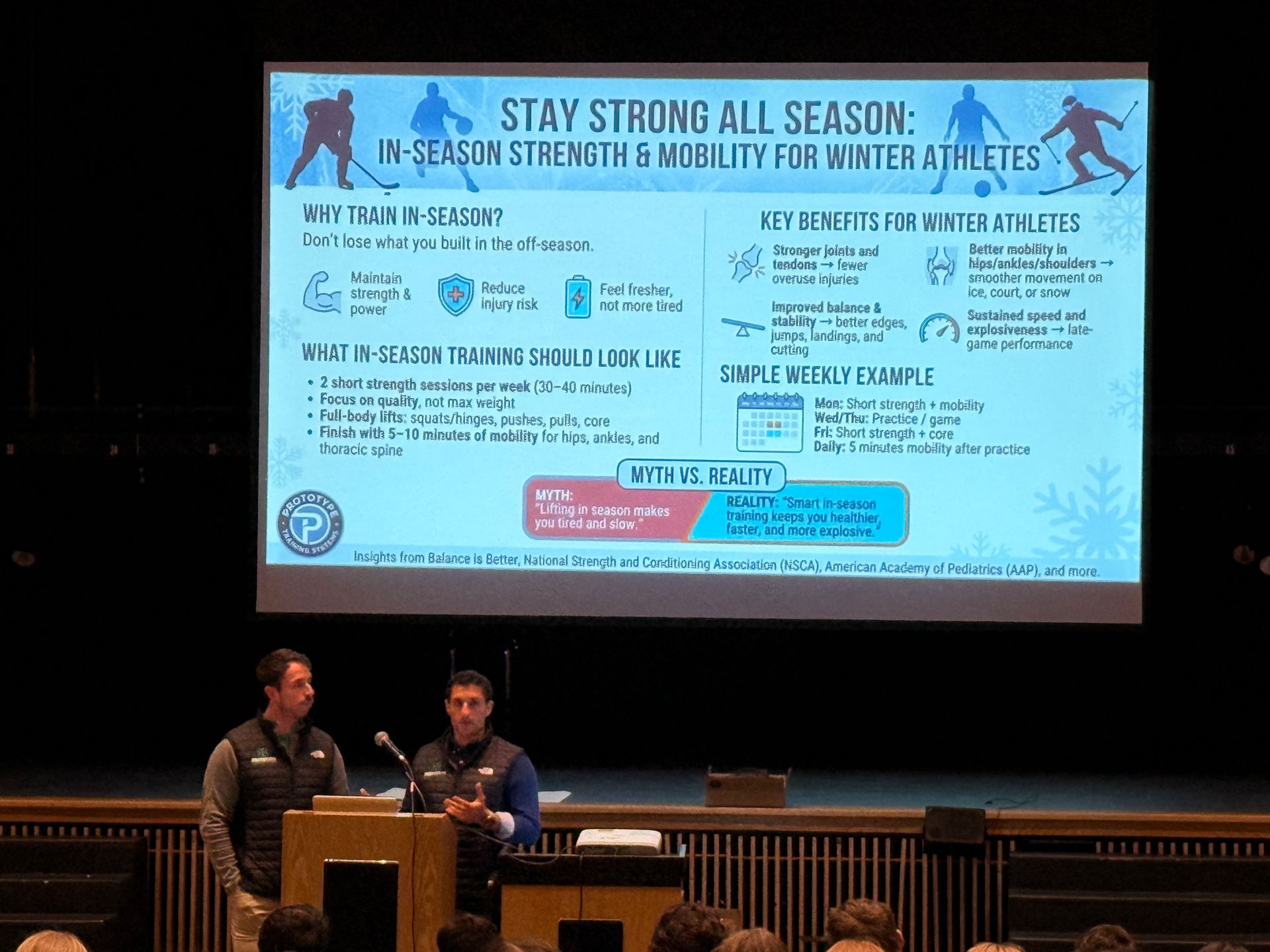
Monday night, our founder of Prototype Training Systems Mike Collette and our GM, Steve Cimino had the privilege of speaking to all Westborough High School winter athletes, parents, and coaches about one of the most overlooked competitive advantages in youth sports: recovery.
A huge thank you to Westborough High School and especially Athletic Director Levi Hanson for inviting us in and prioritizing athlete well-being. This kind of partnership between coaches, families, and performance professionals is exactly what creates safer, healthier, and more resilient athletes.
Our presentation—“The Modern Youth Athlete: A Blueprint for Performance & Longevity”—focused on the foundational habits that allow athletes to train harder, stay healthier, and perform better. We covered the pillars of recovery: daily routines, sleep, nutrition, and smart in-season training. Below is an expanded breakdown of what we discussed.
Why Recovery Matters More Than Ever for Youth Athletes
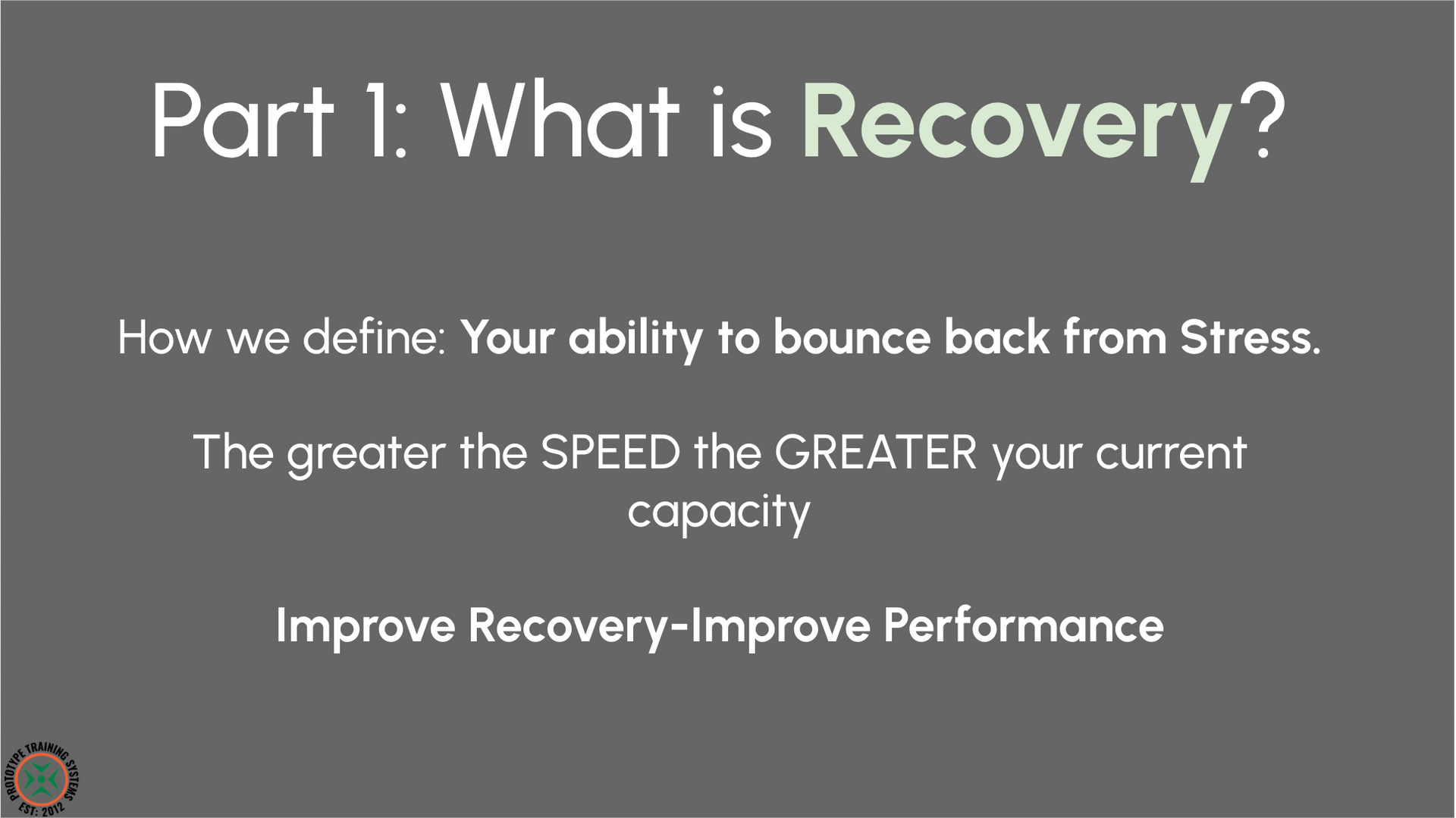
Today’s high-school athletes are juggling more stress than previous generations—academic pressure, early sport specialization, year-round club schedules, and social demands. Research shows that overtraining, chronic fatigue, and lack of recovery increase the risk of injury, burnout, and performance decline.
On page 2 of our slide deck, we highlight how training load must be balanced with adequate recovery. Without this balance, athletes don’t adapt; instead, they accumulate fatigue and move closer to injury.
The central message we shared:
Stress + Recovery = Growth
Training is the stress that signals the body to adapt.
Recovery is where the adaptation happens.
1. Building Better Routines & Habits (The Foundation of Performance)
One of the exercises we walked athletes through was an “audit” of their daily and weekly routines. Most athletes underestimate how much of their performance is shaped not by workouts, but by what they do in the other 22 hours of the day.
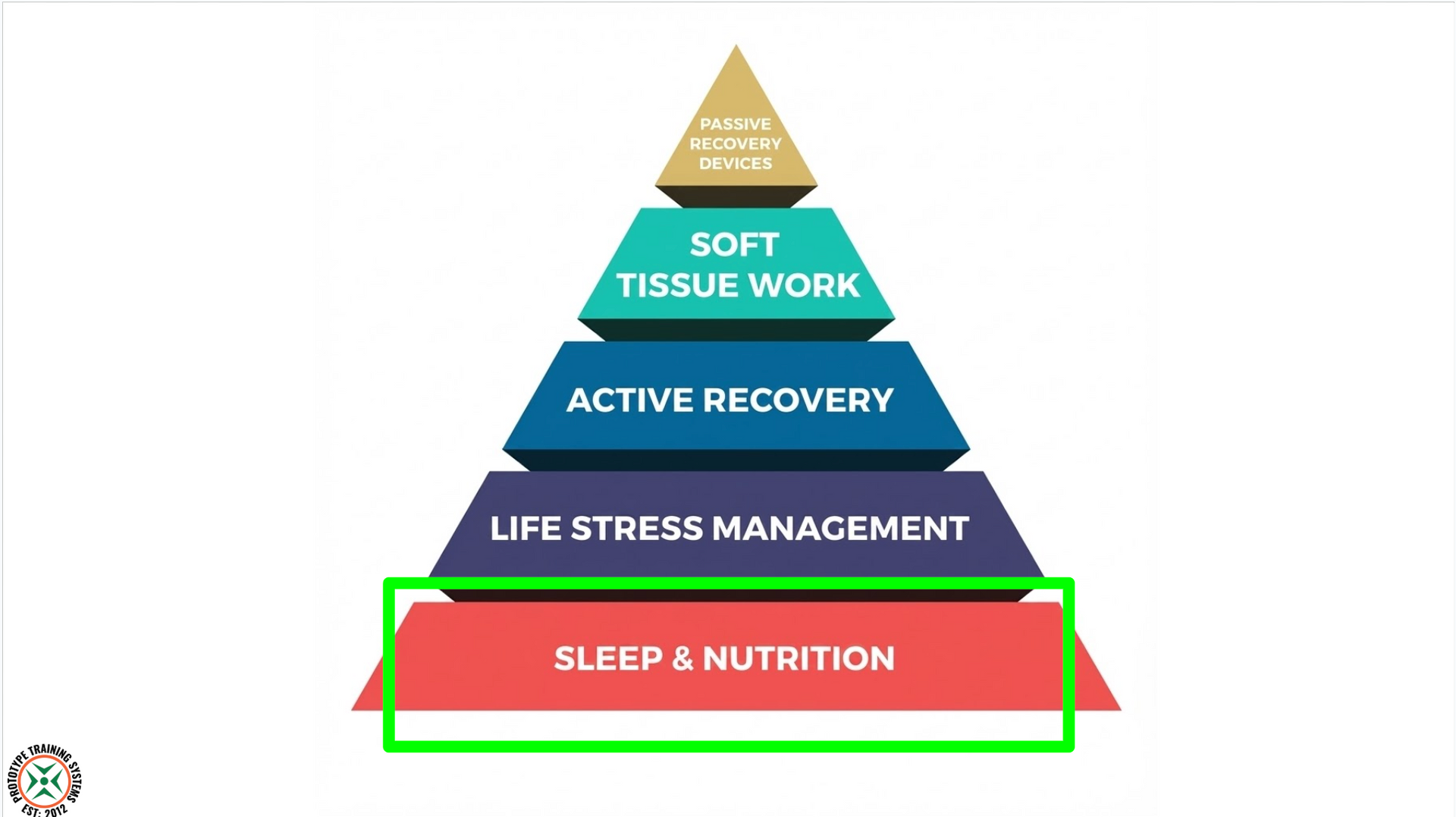
Daily habits—sleep, nutrition, stress management, mobility, and movement—form the base of the “Recovery Pyramid.” Without these, no amount of advanced recovery tools will make a meaningful difference.
We encouraged athletes to take a closer look at:
- Morning routines
- Pre-practice and post-practice habits
- Homework and schedule flow
- Meal timing and consistency
- Night-time wind-down practices
Awareness leads to improvement. When athletes understand what their day really looks like, they can begin to adjust the areas that are holding back performance.

2. Sleep: The Ultimate (and Underused) Performance Enhancer
Sleep is the #1 recovery tool for youth athletes—not ice baths, not supplements, not compression boots. Just consistent, high-quality sleep.
According to our Sleep Best Practices handout, the research is clear:
- High-school athletes (ages 13–18) need 8–10 hours of sleep per night.
- Sleeping
less than 7 hours increases injury risk by
1.7x.
- Sleep Recovery Best Practices
We spoke about how inadequate sleep impairs reaction time, decision-making, accuracy, mood, and energy—all critical components of athletic performance.
We shared actionable strategies, such as:
Sleep Improvement Habits
- Keep consistent bed/wake times (even on weekends).
- Limit screens 60 minutes before bed.
- Create a cool, dark environment (< 68°F).
- Avoid caffeine after 2 p.m.
- Use 20–90 minute naps for alertness—not as a replacement for nighttime sleep.
Sleep is the cheapest, safest, and most effective performance enhancer available to teenagers.
3. Nutrition for Performance: Fueling the High-School Athlete
Most young athletes are under-fueled, especially during winter sports where training load is high and cold temperatures increase energy demands. Our Nutrition & Performance resources emphasize the importance of adequate energy intake, consistent meals, and smart timing around practices and games.
Key Concepts We Covered
Daily Macronutrient Goals
- Carbohydrates: 5–7 g/kg for most high-school athletes
- Protein: 1.2–2.0 g/kg/day, spread across meals
- Fat: 20–35% of total calories
These values support energy, muscle repair, and hormonal health.
Fueling Timing (The Rituals)
To optimize performance:
- 1–4 hours pre-activity: carb-rich meal/snack
- During activity: fluids every 15–20 minutes; carbs if > 1 hour
- Post-activity: carbs + protein within 30–60 minutes
We emphasized that real food is the foundation—teen athletes should not rely on supplements. In fact, as shown below, supplements in the U.S. are poorly regulated and often unnecessary for high-school athletes.

4. Movement, Mobility & In-Season Strength Training
Winter athletes often stop strength training once the season begins—but this is a mistake. We outlined how in-season strength training helps athletes stay strong, reduce injury risk, and maintain speed and explosiveness.
We also shared the
High School Athlete Core 4 Mobility Routine, a simple and scalable system targeting the ankle, hip, spine, and shoulder. This routine improves movement quality and reduces compensations that lead to injury.
These short, intentional sessions help athletes feel better throughout a long competitive season.
What Parents & Coaches Can Do
Youth athlete development is a team effort. Coaches set the training environment; parents shape lifestyle habits; athletes build consistency.
Following the session we sent out information to those athletes, parents and coaches that requested it, here's what it covered:
For Parents
- Ensure at least one off day per week
- Encourage balanced schedules
- Watch for signs of burnout
- Reinforce that nutrition, sleep, and mindset matter as much as skill development
For Coaches
- Communicate with other teams to manage training load
- Recognize early signs of overtraining
- Individualize expectations based on athlete readiness
- Prioritize long-term athlete development over short-term wins
Our Commitment at Prototype Training Systems
At PTS, our mission is to help youth athletes:
- Build strength safely
- Improve movement quality
- Reduce injuries
- Maximize their performance potential
- Develop habits that last far beyond high school
We specialize in strength and conditioning for youth athletes, high-school sports performance training, injury prevention, and performance coaching—and we’re proud to partner with programs like Westborough High School to help cultivate healthier, more resilient competitors.
Looking for Support for Your Athlete or Team?
If you’re a parent, coach, or athlete interested in:
- Personalized youth strength training
- In-season or off-season programming
- Nutrition coaching for young athletes
- One-on-one performance coaching
—we’d love to help.
Contact us or stop by the gym to learn more about our youth development programs! And big thank you again to Westborough High School for having us in!
Previous Blogs



Climb to New Heights
Prototype Training Systems is more than a gym - it is a lifestyle. Join us today!